2026-05-25
A Guide to the Types of Nose Implants and Cartilage!
Hello. This is Vibe Plastic Surgery. Among plastic surgeries, eye and nose surgeries are the most commonly performed. For rhinoplasty, it is very important to choose which implant to use before the surgery. [What types of nose implants are there?] The types of implants commonly used for the nasal bridge include silicone, Gore-Tex, and Silitex. The most widely used nose implant in rhinoplasty today is the silicone implant.

Hello.
This is Vibe Plastic Surgery.
Among plastic surgeries,
eye and nose surgeries
are the most commonly performed procedures.
In the case of rhinoplasty, prior to surgery,
choosing which implant to use
is very important.
[What types of nose implants are there?]
The types of implants commonly used for the nasal bridge
include silicone, Gore-Tex, and Silitex.
Currently, the most widely used nose implant in rhinoplasty
is the silicone implant.
For the nasal tip, avoiding the placement of an implant
as much as possible
yields better results and higher satisfaction.
Therefore, autologous cartilage is usually used for the nasal tip.

The types of autologous cartilage
are ear cartilage, septal cartilage, and rib cartilage.
These three types are the most frequently used.

At one time, Gore-Tex implants were widely used,
but as their disadvantages compared to silicone became more prominent,
they are rarely used today.
Silitex is an implant that started from the idea
of combining only the advantages of silicone and Gore-Tex,
but nowadays, compared to silicone implants,
its frequency of use is also very low.
[Types of Silicone Implants by Nose Shape]
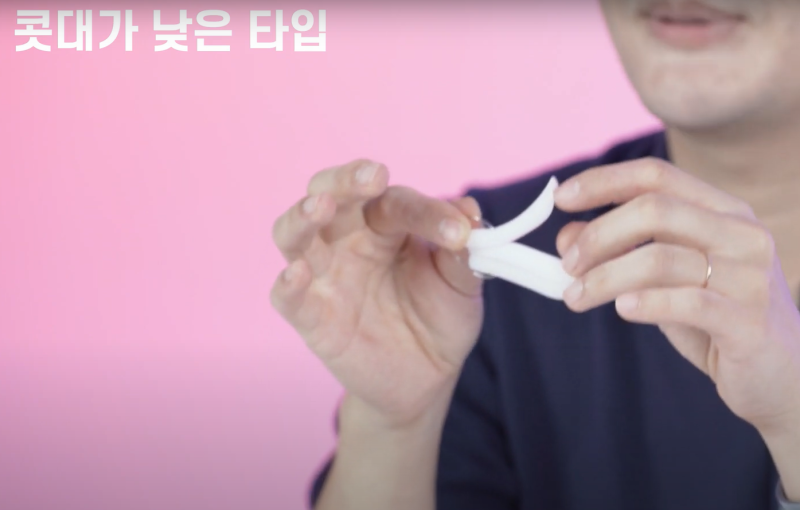
Implant Type for a Low Nasal Bridge
This type of implant
is advantageous for creating the straight-yet-slightly-curved (jik-ban) line
that is highly preferred these days.
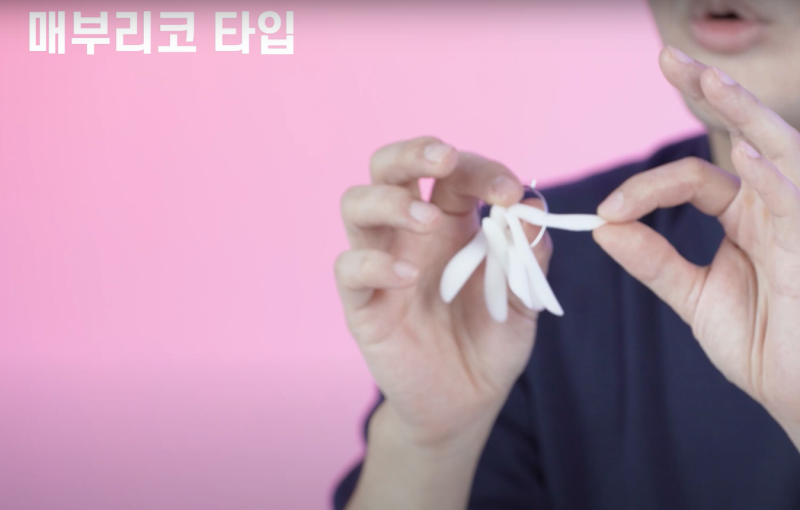
Implant Type for a Hump Nose
This type of implant
is slightly thinner in the middle,
making it more advantageous for cases
where there is a slight dorsal hump.
When there is a hump, we do not shave it all down
and just insert an implant.
The reason is that the surgical method varies depending on
the size and the degree of protrusion of the hump.
Since there is a limit to the thickness of the bone,
trying to resolve it by excessively shaving it down
can cause issues like perforating the inner structure or having the bone grow back.
Therefore, the hump is often moderately smoothed out
and covered using an implant.
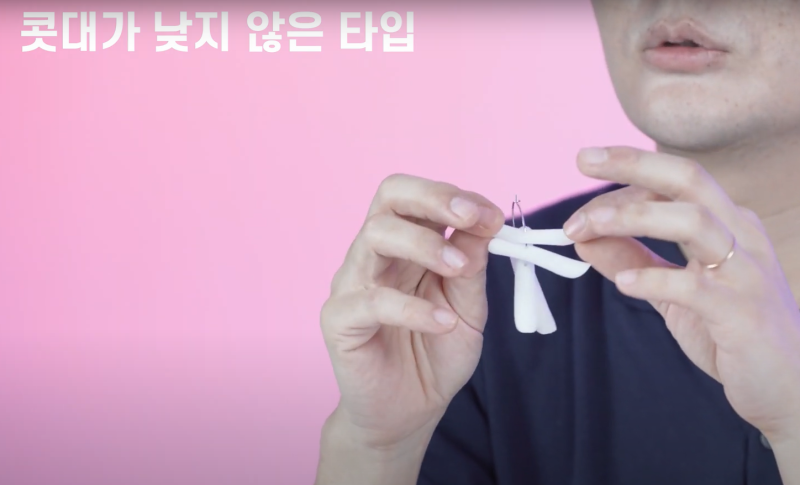
Implant Type for a Nasal Bridge That Is Not Low
This implant might be unfamiliar to you,
but it is a type that starts thin at the bridge and gets thicker towards the bottom.
Usually, if the nasal bridge is not low and the nasal tip is well-developed and high,
a high implant is not needed at the top,
so an implant that starts thin at the bridge and thickens downwards
must be used.
Because nose implants are this diverse,
the implant deemed most suitable
is selected during surgery, sculpted to fit your nose,
and then used.

In the past, implants
were placed all the way from the starting point of the nasal bridge
down to the nasal tip.
However, in such cases, it strongly pressured
the thin skin of the nasal tip,
causing side effects like the skin thinning out or, in severe cases,
the implant protruding through the skin.
However, as we learned through experience
that using autologous cartilage yields definitively better results,
we now try to construct the nasal tip
using only cartilage whenever possible.
[Types of Cartilage Used for the Nasal Tip]
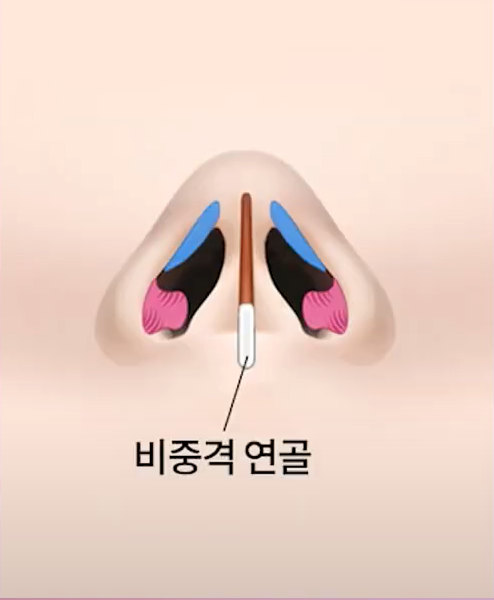
Septal Cartilage
The cartilage called the septum
is the wall-like cartilage located right in the center inside the nose,
separating the left and right sides.
Its characteristics are that it is usually straight, thin,
and has good structural strength.
If the septum is of a good size and not deviated,
it is the first-choice cartilage type.
Ear Cartilage
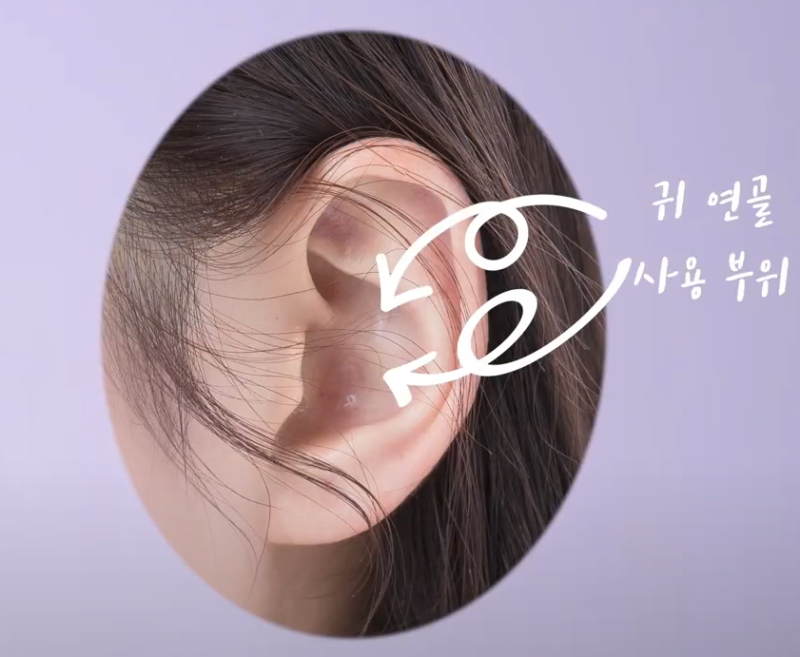
Ear cartilage is not harvested from the outer frame,
but from the concave inner part (concha).
Therefore, the cartilage is harvested and used
within a range that causes absolutely no functional, structural, or morphological issues.
Its characteristics are that it is soft and highly curved,
so there can be limits to its ability to provide straight, rigid support.
On the other hand, it is an excellent material
for achieving natural-looking results.
However, having curves
is not entirely a disadvantage.
If these curves are utilized well by folding the shape,
the curves fold onto themselves to create a high and strong
cartilage pillar,
which is why we recommend ear cartilage just as much as septal cartilage.

Rib Cartilage
Through multiple revision surgeries,
if septal or ear cartilage has already been used,
or if both are weak and lack strength but you desire a sharp and high nose,
rib cartilage is chosen.
If your own cartilage is used, it is autologous rib cartilage,
and if it is purchased from a commercial tissue bank,
donated rib cartilage is used.

Implant-free surgery
is performed using only your own cartilage,
so you can think of it as a truly no-implant procedure.

At Vibe Plastic Surgery,
the chief surgeon personally operates for proper plastic surgery,
and aftercare is also customized to assist with a stable recovery.
Additionally, all spaces within the clinic are single private rooms,
allowing you to rest comfortably without any burden after surgery.




